Temple Street Fish Balls Complete Guide
The short answer
Fish balls are 魚蛋 — jyu daan, literally "fish egg". On Temple Street they cost about HK$15 to HK$25 a skewer, with the cheapest counters nearer HK$10. Order them curried: street stalls usually fry the balls first and hold them in curry or satay sauce. You will find them at the food stalls around the archway end of the market, and at one named venue whose fish balls are actually documented — Temple Street Beef Offal at 18 Arthur Street, a beef-offal shop that also sells them, open Tuesday to Saturday from 17:00.
What a Hong Kong fish ball actually is
A ball of fish paste, salt and starch, poached until it sets. It is one solid, homogeneous sphere — not the Fuzhou version with pork inside, not Korea's flat eomuk, not a Japanese surimi cake. The whole point is the texture: a bite that resists for a moment and then springs back, which is why the Cantonese have a word for it. Dan ah.
That spring is not an accident of good fish. It is a protein effect, and it is the thing to understand before you eat one (see below).
A short history
Fish balls came to Hong Kong from Chiu Chow cooking, where they were traditionally served white and boiled in a light broth. Michelin's guide to the dish traces them there; the encyclopedia record adds that the dish has been popular in southern China since the Qing dynasty, with both Chiu Chow and Fujian roots. Hong Kong is what made it famous, and Hong Kong did that by changing it.
The change was post-war. In the 1950s and 1960s, hawkers stopped poaching the balls and started frying them, then served them in a spicy curry sauce — curry having reached the city through Indian traders during the British colonial period. The same decades were the boom years of the hawker cart, which Michelin's feature describes as an economic lifeline for new immigrants: cheap to start, and it fed the city that was arriving.
Then the trade industrialised. Four Seas Fish Balls took the first manufacturing licence in 1977 and built machines that moved fish balls from family workshops to mass production. The honest consequence is on the plate today: most stalls do not make their own. What a stall is judged on is the sauce.
How completely the city took to them is best shown by a statistic: a 2002 count put Hong Kong's consumption at 55 tonnes a day — about 3.75 million fish balls, roughly 196 per person per year. No later count was found, so read that as a 2002 figure, not a current one.
How they are made
The bounce comes from myosin, a protein released when fish paste is stirred and pounded hard enough that it breaks down and gels into an emulsified paste. Beat it too little and you get crumbly fishcake; beat it properly and the paste turns glossy and holds its shape. Michelin's account of the process is the clearest short version of it.
Two mechanical details explain the rest. Grinding and kneading generate heat, and heat stops the paste binding — so ice goes in throughout, which is why old fish-ball shops look like they are making dessert. And the fish has to be separated from skin and bone first: Cantonese trade accounts describe a 摏機, a pestle machine, doing that job, and then the paste being beaten in a wooden tub. Wood is not nostalgia: it conducts heat slowly, so less ice is needed and the fish flavour is not diluted. The paste is extruded into balls and poached, and hand-pressed ones are still sold as 手唧魚蛋.
Which fish? Michelin, quoting the Hong Kong manufacturer Kau Kee, names golden threadfin bream, bigeye snapper, yellowtail scad, hairtail and lizardfish, with chenpi — sun-dried mandarin peel — in some versions. Other trade sources name croaker, eel and grey mullet instead. What no located source says is shark, which is worth knowing, because shark is a common claim about fish balls and appears in none of the sources used here.
Then there is the sauce, which is where a stall becomes itself. A typical Hong Kong curry base is curry powder, shacha sauce, ground bean paste, garlic and ginger; the ratios and the extras are the secret. Michelin's line is that the precise ratios "are what define a stall's identity", and after 1977 that is mostly what is left to define.
Curry or plain: the two you will be offered
The colour tells you the cooking method. Yellow balls have been deep-fried first and are then held in curry or satay sauce. White ones have not been fried; they are heated through in clear broth. Neither is "the real one" — they are different snacks, and in Hong Kong the yellow one is the street default.
| Variant | What it looks like | How it is served | Where you meet it |
|---|---|---|---|
| Curry fish balls | Yellow, glossy, sauce clinging to the ball | Fried first, then held in curry or satay sauce; on a skewer or in a bowl | Every street counter, including Temple Street |
| Plain (white) fish balls | Pale, matte, no sauce | Poached and held in clear broth | Noodle shops, hot pot, cart-noodle bowls |
| Teochew-style white, with chilli oil | White ball, red oil pooling | Poached, finished with a drizzle of house chilli oil | Fishball Man, To Kwa Wan — its signature |
| Jumbo fish balls | Golf-ball sized, visibly softer | Poached or in curry, depending on the shop | Associated with Cheung Chau; Kung Wo does both sizes |
| Fish slices (魚片) and 魚片頭 | Flat, fried, the ends crispier | The same paste, pressed and fried rather than rolled | Noodle toppings, and the fish-ball counter itself |
Fish balls also turn up inside other dishes — the "curry quartet" of a cart-noodle bowl is radish, pork rind, pig blood curd and fish balls — and they anchor fish-ball noodles and hot pot. If you order a bowl rather than a skewer, that is what you are ordering.
What one costs
The band on this street is about HK$10 to HK$25 a skewer, or, in the form most 2026 guides use, about HK$15 to HK$25. The spread is real: skewers differ in how many balls they carry, and counters differ from one another.
Two cheap data points show the bottom of the market, and both need their units stated. A 2024 report from the Night Vibes food street on Temple Street recorded HK$20 for ten balls; a 2026 review of a Mong Kok shop recorded HK$10 for ten small pieces. Ten balls is not the same purchase as a skewer of five or six, which is why the per-skewer band and the per-ten-balls price can both be right at once.
There is no official price list. The 2002 consumption figure above is volume, not price, and we found no published price list for the street. For what the wider evening costs — the taxi, the claypot rice, the fortune tellers — see the prices and fees guide.
Where to eat fish balls near Temple Street
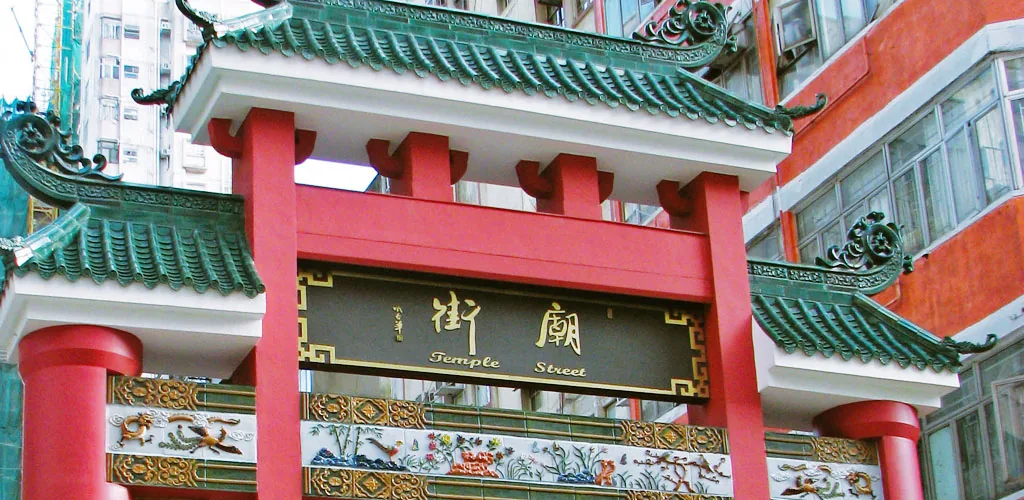
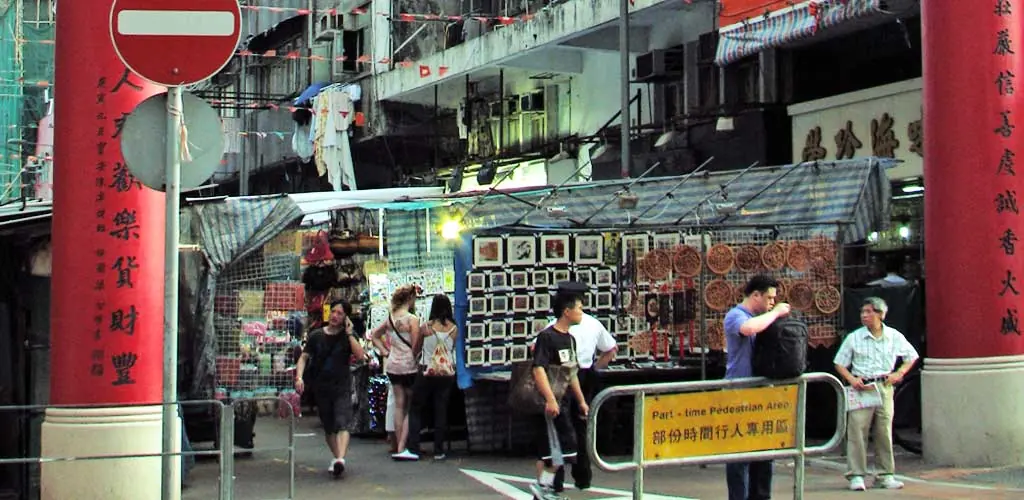
The Tourism Board puts fish balls on this street plainly: it lists them among the snacks sold "from the many food stalls near the Temple Street Archway", alongside claypot rice and siu mai. It names no stall. Neither does Michelin, whose fish-ball picks are all elsewhere (see the next section), and neither does any other public source we could find. So this page will not give you a stall name or a stall number: we could find no public source that names one, and inventing one would be worse than leaving the gap.
What can be named is a venue. Temple Street Beef Offal (廟街牛雜) at 18 Arthur Street, a side street off the northern, Yau Ma Tei end, lists 魚蛋 among its signature items next to the offal, the braised radish and the pomelo peel. It is in Michelin's Selected list, opens Tuesday to Saturday from 17:00 to midnight, is closed Sunday and Monday, and is cash only. It is a beef-offal shop that also sells fish balls, which is an honest way to hand you a name without inventing a stall.
One more dated fact, because it explains why people remember stalls that are gone. In December 2023 the Night Vibes pilot opened a food street on the Jordan Road to Nanking Street stretch of Temple Street — roughly 100 metres, about 22 food stalls plus about 10 nostalgic-snack stalls, trading 2pm to 11pm, and it is where the HK$20-for-ten-balls price above was recorded. It was time-limited. Treat the stall count as a 2023–24 event, not as what is there tonight.
Where else in Hong Kong
The four fish-ball shops Michelin actually lists are all a few MTR stops away. If the dish is the reason you are reading, one of these is worth the trip.
| Venue | Address | Michelin status (2026) | Hours | What to order |
|---|---|---|---|---|
| Hop Yik Tai | 121 Kweilin Street, Sham Shui Po | Selected | 06:00–20:30 daily | Fish balls with pork skin and braised radish; its rice rolls are the most popular item |
| Kung Wo Beancurd Factory | 118 Pei Ho Street, Sham Shui Po | Bib Gourmand | Check before you go | Traditional curry fish balls and jumbo fish balls, with tofu pudding |
| Fishball Man | Shop B, GF, 183 Ma Tau Wai Road, To Kwa Wan | Selected | 14:30–02:00 daily | Springy white Teochew fish balls with house chilli oil; +852 9727 3347 |
| Man Kee Cart Noodles | 121 Fuk Wing Street, Sham Shui Po | Selected | Check before you go | The curry quartet; cash only; +852 9059 5104 |
| On Lee Noodles | 22 Shau Kei Wan Main Street East | Not Michelin-listed — a 2018 magazine pick | Check before you go | Chiu Chow-style fish balls, soft and aromatic, from a dai pai dong trading since 1966 |
Type: addresses and award classes checked 5 November 2026 against Michelin's own pages. Hours are Michelin's listings; where they were not published, this table says "check before you go" rather than guessing a window. Confirm before a long trip.
The 2018 list that On Lee comes from names others still worth knowing: Tung Tat Food Shop on Fa Yuen Street in Mong Kok, for a very spicy curry; Fai Kee in Wan Chai, for bouncy balls and offal; Hong Kee in Tai Po Hui Market, for fish-ball noodles; and Welcome Food Court on Cheung Chau, for the golf-ball-sized giant version. Those are 2018 recommendations, not a current ranking. Back at the market, the question of where else to eat in Hong Kong is answered by the food page: claypot rice, seafood, noodles.
How to order and eat one
Point at the pot, say "curry" or "plain", pay cash, take the skewer and eat it standing up. If the counter has a jar of curry sauce, ask for extra — the sauce is the point. Tea or a soft drink from the same stall is normal.
What a good one is like: firm first, then springy, with a clean fish taste rather than a batter taste. Traders give two negative tells. A greyish ball usually means the fish was not cleaned properly before mincing. An over-bouncy ball, one that snaps back like rubber, is often a paste that failed and was rescued with additives — one Cantonese trade essay's view is that a good fish ball is tender with a little spring, not elastic.
For the other cheap eats within a few minutes' walk, including the four Michelin-recognised shops near the market, see Michelin street food near Temple Street. For how the evening fits together — hours, trains, cash and what the rest costs — see the first-time visitors guide.
